
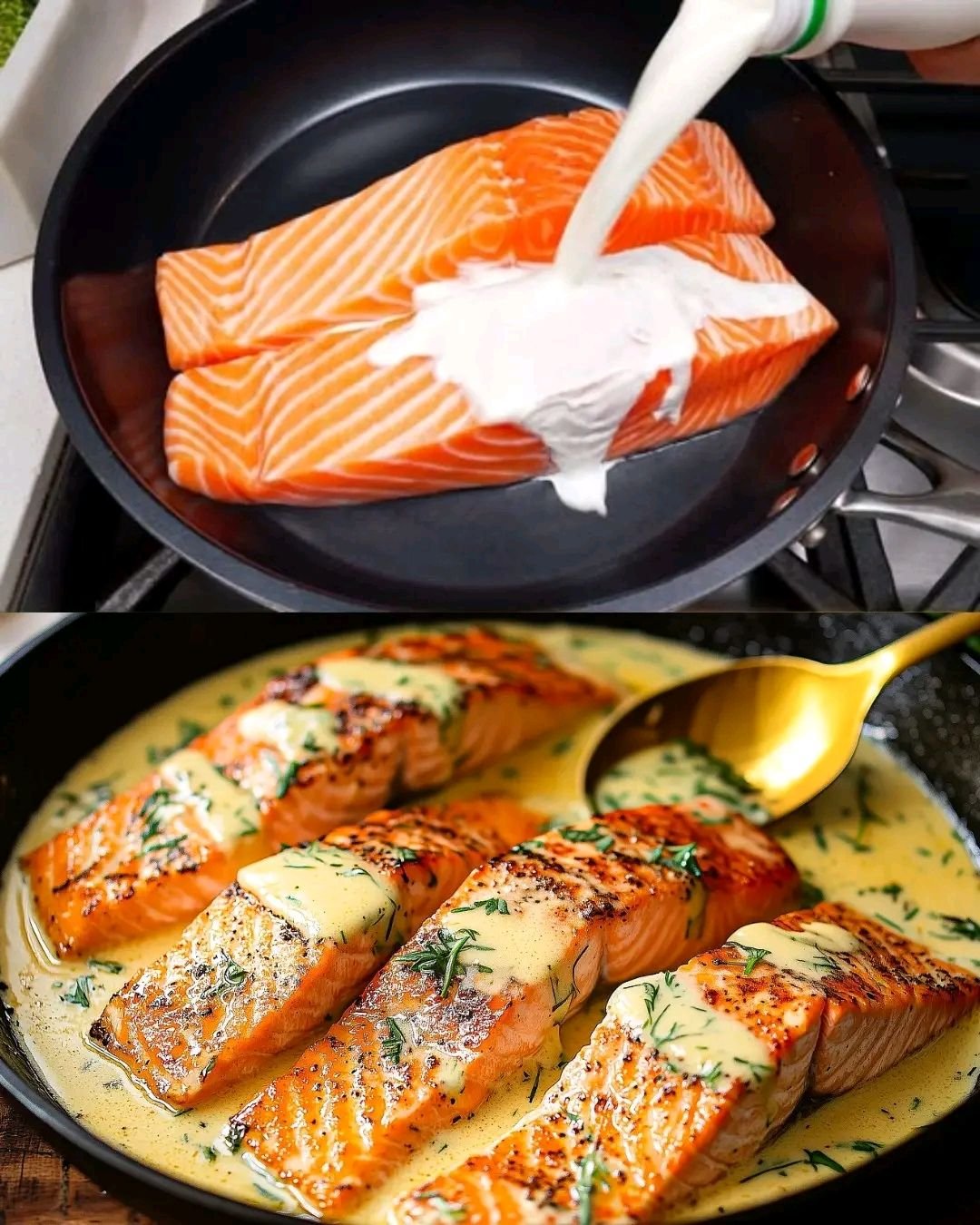
This Creamy Lemon Dill Salmon with Mashed Potatoes elevates simple weeknight fare into a restaurant-quality meal. Tender, pan-seared salmon fillets are bathed in a luscious sauce of chicken broth, crème fraîche, shallots, garlic, and bright lemon zest, then finished with a pat of butter and fresh dill for a silky finish. Served atop pillowy mashed russet potatoes, each bite delivers a harmonious balance of rich creaminess, vibrant citrus, and delicate herb notes.
Cooking Time
- Preparation: 15 minutes
- Salmon Searing & Sauce: 12 minutes
- Potato Boil & Mash: 18–20 minutes (overlapping)
- Total Time: Approximately 40–45 minutes
Ingredients
For the Salmon:
- ½ tablespoon olive oil
- 1 tablespoon unsalted butter
- 4 skinless salmon fillets (about 150–180 g each)
- Salt and freshly ground black pepper, to taste
For the Sauce:
- 1 shallot, finely chopped
- 2 cloves garlic, minced
- Zest of 1 lemon (about 1 teaspoon)
- ¾ cup (180 ml) chicken broth
- ¾ cup (200 g) crème fraîche or sour cream
- ½ tablespoon unsalted butter
- Small handful fresh dill, chopped
- Salt and freshly ground black pepper, to taste
For the Mashed Potatoes:
- 1 kg (2 lb) russet potatoes, peeled and cut into 2–3 cm chunks
- 1 tablespoon salt (for boiling water)
- ½ cup (120 ml) warm milk
- 3 tablespoons unsalted butter
- Salt and freshly ground black pepper, to taste
Step-by-Step Cooking Directions
Prepare the Potatoes:
Fill a large pot with cold water and add 1 tablespoon salt. Add potato chunks, bring to a boil over high heat, then reduce to a simmer. Cook until potatoes are fork-tender, about 18 minutes. Drain well and return to pot.
Mash the Potatoes:
Over low heat, add butter to the hot potatoes. Mash until mostly smooth. Pour in warm milk gradually, mashing until creamy and lump-free. Season with salt and pepper to taste and cover to keep warm.
Sear the Salmon:
While potatoes cook, heat olive oil and 1 tablespoon butter in a large skillet over medium-high heat. Pat salmon dry and season both sides with salt and pepper. Place fillets in skillet, pressing gently so they make contact. Cook skin side down for 3 minutes until golden and crisp. Flip and cook 2 more minutes. Transfer salmon to a plate; tent loosely with foil.
Build the Sauce:
Lower heat to medium. In the same skillet, add chopped shallot and sauté for 2 minutes until translucent. Stir in garlic and lemon zest; cook 1 minute until fragrant.
Deglaze and Thicken:
Pour in chicken broth, scraping browned bits from the pan. Simmer gently for 5 minutes to reduce slightly.
Enrich the Sauce:
Stir in crème fraîche or sour cream and ½ tablespoon butter. Cook 3–4 minutes, stirring occasionally, until sauce is silky and coats the back of a spoon. Season with salt and pepper.
Finish the Dish:
Return salmon fillets to the skillet, spooning sauce over them. Simmer 3–5 minutes until fillets are cooked through (internal temperature 50–55 °C) and infused with sauce flavors. Sprinkle chopped dill over top and remove from heat.
Plate and Serve:
Spoon mashed potatoes onto warm plates. Top each mound with a salmon fillet and drizzle with extra sauce. Garnish with additional lemon zest or dill sprigs, if desired. Serve immediately.
Nutritional Information (Per Serving; serves 4)
- Calories: 580 kcal
- Protein: 35 g
- Carbohydrates: 45 g
- Dietary Fiber: 4 g
- Sugars: 4 g
- Total Fat: 30 g
- Saturated Fat: 15 g
- Cholesterol: 125 mg
- Sodium: 800 mg
- Vitamin A: 20% DV
- Vitamin C: 15% DV
- Calcium: 10% DV
- Iron: 15% DV
Reasons to Love This Recipe
- Restaurant-quality flavours with easy steps
- Balanced meal with protein, carbs, and healthy fats
- Vibrant lemon and dill bring freshness
- Great for weeknights or entertaining
- Mashed potatoes and sauce can be prepped ahead
Serving Suggestions
- Pair with steamed asparagus or green beans with lemon zest
- Add a crisp salad with Dijon vinaigrette
- Serve with crusty bread to soak up sauce
- Substitute half the potatoes with mashed cauliflower for a lighter option
Common Mistakes to Avoid
- Overcrowding the Pan: Prevents crisp browning; cook in batches
- Skipping Deglazing: You’ll lose deep flavour from pan fond
- Cold Potatoes: Always mash them hot for smooth texture
- Overheating Sauce: Keep at a gentle simmer to avoid curdling
- Undercooking Salmon: Use thermometer—aim for 50–55 °C
Pairing Ideas
- Wine: Sauvignon Blanc or unoaked Chardonnay
- Beer: Light pilsner or wheat beer
- Non-Alcoholic: Sparkling water with cucumber and mint
- Cocktail: Lemon-dill gimlet or vodka tonic with dill
Cooking Tips
- Use evenly thick salmon fillets
- Warm milk before adding to potatoes
- Bring butter and crème fraîche to room temperature
- For dairy-free: use coconut cream + olive oil
- Tear dill gently for best flavour
Variations
- Smoked salmon and chive mash
- Use orange zest and rosemary instead of lemon and dill
- Add red pepper flakes or sriracha for heat
- Sauté mushrooms with shallots for depth
- Add Parmesan to mash for cheesy richness
FAQ
Can I use frozen salmon fillets?
Yes—thaw completely and pat dry first.
Is chicken broth necessary?
Vegetable or fish stock is fine; water plus seasoning works too.
How to prevent curdling?
Keep sauce heat low and stir continuously.
Can I use yogurt instead of crème fraîche?
Greek yogurt may curdle—temper with a little hot sauce first.
What if the sauce is too thin?
Simmer longer or add a cornstarch slurry.
How to store leftovers?
Store salmon and mash separately in the fridge (up to 3 days).
How to reheat without drying out salmon?
Cover with foil and warm in low oven at 120 °C for 10–15 minutes.
Best potatoes for mash?
Russet or Yukon Gold for fluffiest results.
Low-sodium version?
Use less salt, low-sodium broth, and more herbs/zest.
Is this gluten-free?
Yes—just make sure broth and thickener are gluten-free.